Uterine prolapse
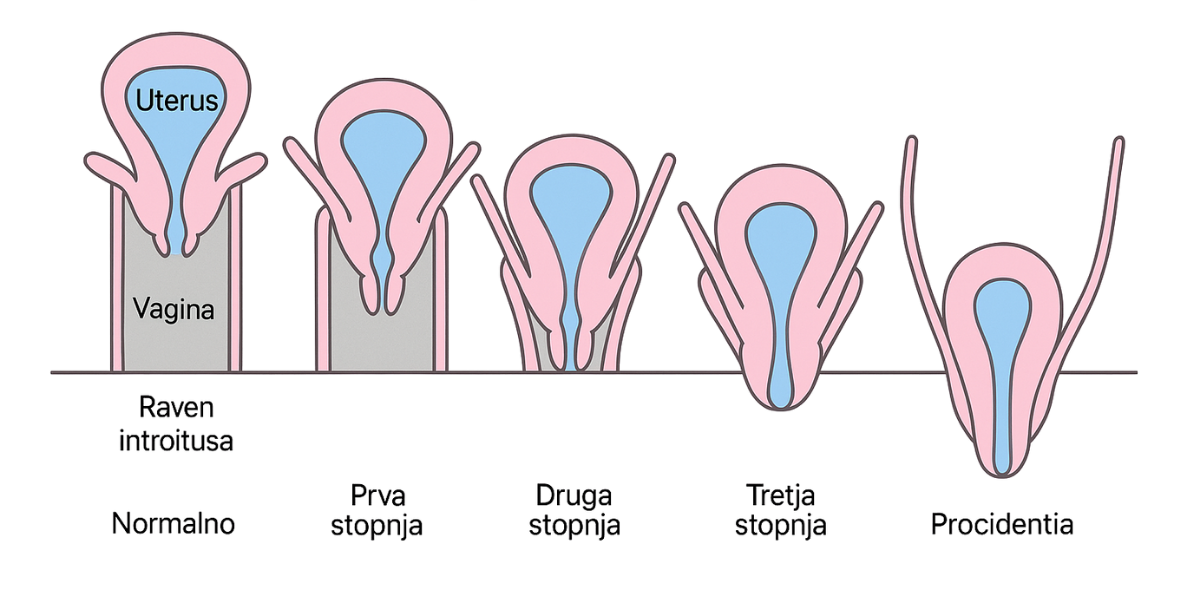
We speak of uterine prolapse or descent when, due to weakened connective tissue and pelvic floor muscles, the uterus slides into the vagina or outside of it.
In the small pelvis are the uterus, bladder, large intestine, and urethra. Any of these organs can descend or slide into the vagina, but most commonly the bladder and uterus prolapse.
Common symptoms of prolapse include a feeling of pressure in the vagina due to bulging, a sensation of ‘pulling’ downward, and sometimes lower back pain. Sometimes the uterus even slides out of the vagina and women can feel it.
Uterine prolapse is generally more common in older women, but we also see it in younger women. The main cause of uterine prolapse is previous damage to the pelvic floor muscles and connective tissue during childbirth. Uterine prolapse is therefore less common in women who have not given birth or who delivered by cesarean section.

Treatment
The treatment method for uterine prolapse depends on the extent of the prolapse and the patient’s age and preferences.
We develop a treatment plan based on clinical and ultrasound examination, recommending the most optimal treatment method that can either preserve the uterus or remove it.
We generally do not recommend the insertion of pessaries (vaginal rings), as we see more disadvantages than advantages with this approach!
UTERINE REMOVAL
Vaginal Hysterectomy
We perform major procedures at top private clinics, where we rent their facilities and utilize their highly trained staff.
We recommend hysterectomy for older patients. This operation is also suitable for our oldest patients and those with associated serious heart, blood pressure, or lung problems, as our specialists perform this procedure under sedation, which older patients tolerate exceptionally well, as it is less invasive than general anesthesia.
The procedure takes less than 1 hour, requiring only one night’s stay at one of the private clinics, which also provide intensive overnight patient monitoring.
UTERINE PRESERVATION
Every other woman wishes to preserve her prolapsed uterus, and we can make this possible at our BUT Clinic!
Most often we choose laparoscopic uterine suspension, where we attach the uterus with a special mesh to the ligament that runs over the sacral promontory (sacrohysteropexy).
The operation is performed under general anesthesia, takes approximately one hour, and patients are discharged home the day after surgery.
If laparoscopic surgery is not feasible for various reasons, we can also lift the uterus through a vaginal procedure using a special tissue suturing technique (Manchester-Fothergill operation).
The success of this type of operation may be somewhat lower, with possibly more post-operative complications, but the advantage of this operation is that it can be performed under sedation and local anesthesia. Surgery duration is less than one hour, with discharge home the day after surgery.